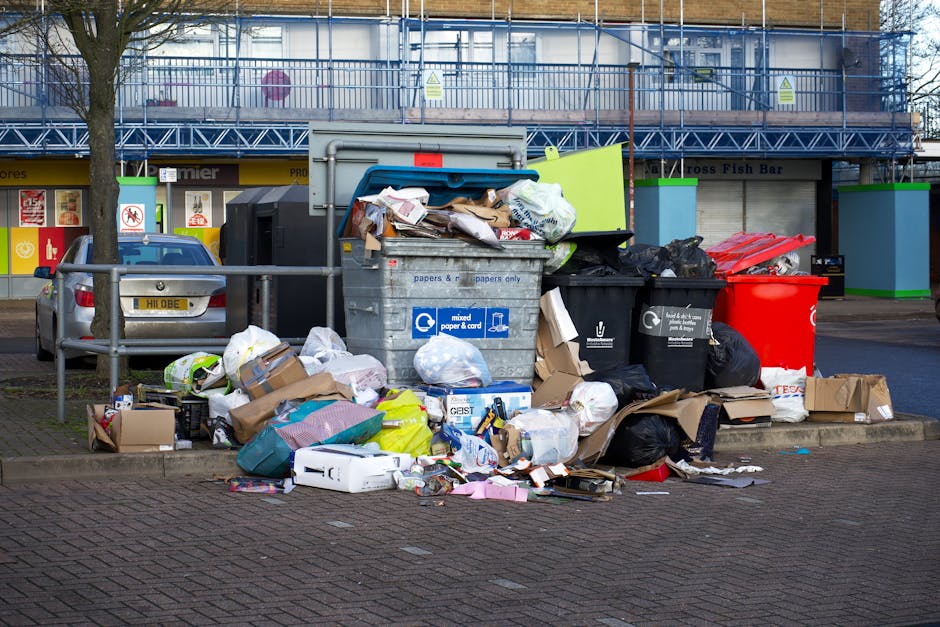
Do you need a permit for bulky rubbish in Harlow Council areas?
If you are trying to clear an old sofa, a broken wardrobe, a mattress that has seen better days, or a mixed pile of household waste, the first question is often a practical one: do you need a permit for bulky rubbish in Harlow Council areas? The short answer is that it depends on how and where the rubbish is being removed, who is collecting it, and whether the waste is going onto a vehicle, into a council service, or into a skip or other container on public land. That sounds a bit fiddly, I know. But once you break it down, it becomes much easier to handle.
This guide explains the difference between bulky rubbish, skip permits, council collections, and private waste removal in plain English. It also shows you the common mistakes people make, what to check before booking, and how to choose the simplest route for your situation. If you are clearing a flat, a garage, a loft, or just the one overstuffed corner of the house, the right approach can save time, stress, and a last-minute headache.
For readers arranging wider household or furniture removal, it can also help to compare options such as house clearance, furniture disposal, or broader waste removal services. Not every load needs a permit, but some situations definitely need careful checking.
Quick takeaway: bulky rubbish itself does not automatically mean a permit is needed. Permits usually become relevant when a skip, container, or waste arrangement sits on public land, or when the collection route is controlled by council rules. The cleanest answer is to identify the disposal method first, then check the permit position.
Why Do you need a permit for bulky rubbish in Harlow Council areas Matters
Bulky rubbish looks simple from the curb. A sofa is a sofa. A mattress is a mattress. But the disposal route behind it can be very different, and that is where people get caught out. In Harlow Council areas, the key question is not simply what the item is, but how it will be removed. Is it being taken by the council through a bulky item collection? Is it being loaded into a van by a licensed waste carrier? Or is it going into a skip outside your home for a few days while you clear the place room by room?
That distinction matters because permits are usually linked to placing a skip, container, scaffold, or obstruction on a public highway. A permit is less about the waste item itself and more about the physical setup around it. If a skip sits on the road, a permit may be needed. If a crew removes the bulky items directly from inside your property, often no permit is involved. Simple, but not always obvious.
There is also a cost angle. A permit that was not planned for can delay a job, add admin, and sometimes force you to reschedule. And let's face it, when you are already dealing with a cluttered hallway or a garage full of damp boxes, the last thing you want is a paperwork surprise.
For anyone dealing with furniture-heavy clearances, it can help to think beyond the permit question and look at the whole removal method. For example, if the item is reusable or saleable, a service like furniture clearance may be more suitable than a one-off council-style uplift. If the load includes mixed household goods, a broader home clearance can often be simpler than handling each item separately.
How Do you need a permit for bulky rubbish in Harlow Council areas Works
The practical answer works in layers. First, identify what kind of bulky rubbish you have. Second, decide how it will leave the property. Third, check whether the disposal method touches public space or falls under council controls. That sequence matters because different scenarios trigger different requirements.
1. Council bulky waste collection
If you are using a council bulky waste service, the council normally sets the rules for collection days, item limits, presentation instructions, and any charges. In many cases, you do not arrange a street permit yourself for this kind of collection because the council is managing the service. But you still need to follow the collection instructions exactly. Items may need to be left at the boundary, in a specific place, or on a certain day.
2. Private waste removal
If a private waste team collects bulky rubbish directly from your property, the need for a permit usually depends on access and loading arrangements. A van parked on your drive? Normally no permit. A truck partly occupying a public road for loading? That may raise a parking or access issue, but not necessarily a waste permit. Different rules can apply, and sometimes the vehicle side of the job matters more than the waste side. A reputable operator should know this and plan accordingly.
3. Skip hire or container placement
This is the classic permit situation. If a skip is placed on a road, verge, or other public area, a permit is often required. If the skip is entirely on private land, such as a driveway, a permit is usually not needed. The trouble is that some driveways are too small, shared access can be awkward, and one slightly oversized skip can end up poking into public space. You can see where this is going.
4. Mixed loads and unusual items
Bulky rubbish is often part of a bigger clearance. Maybe you have a broken wardrobe, a few pieces of soft furnishings, and then a pile of old garden timber or renovation offcuts. That mixed load can affect how it must be handled. Builders' waste, for example, may follow different expectations from domestic furniture. If your job is part renovation, part household tidy-up, the most suitable service may be builders waste clearance rather than a generic rubbish collection.
In short, the permit question is really a method question. Once you know the method, the answer becomes much clearer.
Key Benefits and Practical Advantages
Getting the permit question right is not just about being compliant. It also makes the clearance feel much less chaotic. There is a big difference between a job that is planned properly and one that begins with someone standing on the pavement, scratching their head at a half-delivered skip. Been there, or at least seen enough of it.
- Less delay: You avoid the frustration of a container being placed somewhere it should not be.
- Cleaner planning: The waste route is decided before anything starts moving.
- Lower stress: No one wants a last-minute scramble for permission or parking adjustments.
- Better safety: A properly organised collection reduces trip hazards and awkward lifting.
- More accurate pricing: Knowing the setup in advance helps the quote reflect reality.
- Fewer disputes: Clear arrangements mean less confusion between homeowner, landlord, contractor, and waste team.
There is also a practical benefit that people sometimes overlook: the right removal method can reduce how much waste you think you need to move. For example, if you are clearing a garage or loft, some items may be better sorted for reuse, donation, or special handling rather than lumped into one pile. A service such as garage clearance or loft clearance can help separate those decisions, which is often where the real time-saving happens.
Who This Is For and When It Makes Sense
This question comes up for a lot of different people, not just homeowners. In practice, the permit issue affects anyone dealing with bulky waste in a space where access is tight, ownership is shared, or the waste needs to sit outside before collection.
Homeowners and tenants
If you are clearing an old sofa after a move, replacing furniture, or finally getting rid of that mattress with the mysterious squeak, you need to know whether the waste is going out via council collection, private uplift, or a skip. Tenants in flats often need extra care because shared hallways, communal entrances, and parking restrictions can complicate things quickly.
Landlords and letting agents
End-of-tenancy clearances often involve bulky rubbish, damaged furniture, and a small mountain of odds and ends. If the flat is in a block with tight access, it may make more sense to use a team that can clear it in one visit than to rely on a skip outside. A flat clearance service is often the cleaner option in these situations.
Families handling probate or downsizing
When a property needs to be emptied after a bereavement or in preparation for a move to a smaller home, the job can feel heavier emotionally than physically. The permit issue is only one part of a bigger process, but it matters because the last thing people need is avoidable admin. A structured house clearance or home clearance can reduce the number of moving parts.
Businesses and offices
Offices replacing desks, cabinets, and chairs may also face access and permit questions, especially if the building is in a busy part of town or a shared commercial location. In those cases, an office clearance or business waste removal arrangement is often more appropriate than treating the waste like a simple household job.
Builders and renovators
If the bulky rubbish is tied to refurbishment, fit-out, or light construction, you may have mixed waste streams. Plasterboard, timber, broken units, packaging, and old fixtures can all be involved. That is where a specialised approach matters, because the collection method and site access can affect whether a permit or other permission is needed.
Step-by-Step Guidance
If you want a no-nonsense way to work this out, use the following steps. They are simple, but they save a surprising amount of hassle.
- List the bulky items. Write down what is going: sofa, bed base, wardrobe, fridge, cupboard, garden furniture, or mixed household junk. The more precise you are, the better.
- Decide where the items are now. Are they indoors, in a garage, in a driveway, or already outside?
- Choose the removal method. Council collection, skip hire, or private clearance team. This is the turning point.
- Check if public space is involved. If a skip or container will sit on a road, verge, or pavement, permit rules may apply.
- Ask about access. Narrow gates, shared parking, low hanging branches, or stair-only access can affect the setup.
- Confirm what the service includes. Some teams collect from inside the property; others only load from the roadside or kerb edge.
- Get the arrangement in writing. Not in a dramatic legal sense, just a clear written confirmation so nobody is guessing on the day.
- Prepare the items. Keep walkways clear, separate hazardous items, and group everything you want taken.
If the load is mainly furniture, it can also be worth checking whether a dedicated furniture route makes more sense than a general waste job. That is one reason why furniture clearance and furniture disposal pages exist separately: the needs are similar, but not quite the same.
Expert Tips for Better Results
In our experience, the easiest clearances are not always the smallest ones. They are the ones where the access, timing, and waste type have been thought through before anyone starts lifting. A few small choices can make a big difference.
- Measure the space before booking a skip. A tape measure can save a permit headache, honestly.
- Separate reusable items early. It keeps the load smaller and may reduce cost.
- Photograph awkward items. A quick picture of a broken wardrobe or bulky sofa helps a clearance team judge space and access.
- Check parking conditions at the property. Especially on narrow residential roads where even a van can be a problem.
- Ask whether collection is from inside or outside. That tiny detail changes the whole job.
- Do not mix bulky waste with hazardous items. Paint, chemicals, gas cylinders, or similar items need separate handling.
- Plan around building access times. Flats and managed sites can be picky about lift use, loading bays, and noise early in the morning.
One small but useful trick: create a "take" pile and a "keep" pile, and physically separate them. It sounds almost too obvious, but in a cluttered room, the difference between the two can blur very quickly. At 8:15 on a rainy Tuesday, nobody enjoys re-checking whether an old side table was meant to stay or go.
Common Mistakes to Avoid
Most permit problems are not caused by bad intentions. They happen because people assume bulky rubbish works the same way everywhere. It often does not.
- Assuming every bulky item needs a permit. The item itself is not always the issue; the removal setup is.
- Booking a skip without checking driveway size. A skip that partly sits on the road may trigger permit requirements.
- Forgetting shared access rules. Flats, estates, and mews developments often have extra restrictions.
- Leaving everything until the last minute. That is how collection-day panic begins.
- Mixing furniture with construction debris without telling anyone. The quote and handling method can change.
- Choosing the wrong service for the job. A one-off chair pickup is not the same as clearing a whole property.
- Not checking whether the waste carrier is properly organised. You want a team that understands what they can take and how they'll take it.
To be fair, the most common mistake is probably trying to make a one-size-fits-all decision. But bulky rubbish is rarely one-size-fits-all. It tends to be a mix of space, access, timing, and item type.
Tools, Resources and Recommendations
You do not need a technical toolkit to deal with bulky rubbish well. What helps most is a few practical basics and a decent plan.
- Measuring tape: Useful for checking doors, corridors, driveways, and skip space.
- Phone camera: Handy for sharing photos of items, access points, or bulky furniture with a removal team.
- Simple inventory list: Write down what is going and what is staying.
- Gloves and sturdy footwear: Especially if you are moving items to a collection point.
- Labels or sticky notes: Very useful in multi-room clearances or shared properties.
- Waste bags or boxes: Good for separating loose items before collection day.
If you are comparing service options, a clear quote page can help you understand what is included before you commit. It is worth reviewing pricing and quotes alongside the service that best fits your situation. And if you want a little reassurance about how a company handles jobs and customer care, the about us page can be useful for understanding their approach.
For customers who care about responsible disposal, check whether sustainability and recycling are built into the service. A provider with a clear recycling and sustainability approach is usually thinking beyond simple collection, which is what you want with mixed bulky waste.
Law, Compliance, Standards, or Best Practice
This is the bit people tend to skip until they absolutely cannot. Yet it matters. In the UK, waste must be handled lawfully, and the practical expectation is that the person arranging disposal understands where the waste is going and who is taking it. That is especially true for bulky rubbish, because large items often look harmless while still needing proper transport and disposal arrangements.
A few sensible best-practice points apply almost everywhere:
- Use a lawful disposal route. Do not assume a roadside dump or informal pickup is acceptable just because the item is large and inconvenient.
- Check whether a permit is needed for public land use. This is most relevant for skips and containers.
- Keep access safe. Shared entrances, stairwells, and communal paths should stay clear where possible.
- Separate hazardous or specialist items. Some things need special handling and may not belong in general bulky rubbish.
- Clarify responsibility. If you are the property owner, tenant, landlord, or contractor, make sure everyone knows who has arranged the collection and who is confirming access.
If your bulky rubbish is part of a renovation, a loft clear-out, or a garage clean-up, best practice is usually to sort the waste stream first and then decide on the most efficient removal method. That is one reason clearances like garden clearance and garage clearance can be more useful than trying to solve everything with a single generic booking.
Options, Methods, or Comparison Table
Here is a simple comparison to help you decide whether a permit is likely to be relevant, and which route tends to work best.
| Method | Typical permit risk | Best for | Main advantage |
|---|---|---|---|
| Council bulky waste collection | Usually low for the customer, as the council handles the service setup | Single items or small collections | Simple and familiar |
| Private clearance team collecting from inside | Usually low, unless public space or special access is involved | Furniture, mixed household loads, flat clearances | Fast and convenient |
| Skip on private driveway | Usually low if fully on private land | Clear-outs where you can load gradually | Flexible timing |
| Skip on road or verge | Higher, because a permit is often needed | Properties with no driveway space | Good access where space is limited |
| Mixed builders' waste removal | Varies depending on setup and access | Renovation debris and bulky offcuts | Handled as one organised load |
The takeaway is straightforward: if you can keep the waste on private land and remove it directly, the permit issue often disappears. If you need to use public space, it tends to return pretty quickly.
Case Study or Real-World Example
A typical scenario looks like this. A couple moving out of a first-floor flat in Harlow have an old three-seat sofa, a broken dining table, two wardrobes, and a stack of odd boxes they have been meaning to sort for months. At first, they think a skip on the street will be easiest. Then they realise the road is narrow, parking is already tight, and the block has strict access rules. A permit could be needed, and even then, the loading might be awkward.
Instead, they arrange a direct collection. The team arrives, assesses the stair access, and removes the furniture from inside the flat. No skip sits outside. No one needs to shuffle cars. No one has to keep checking whether the wind has blown the tarpaulin loose. The whole thing takes less time than the couple expected, and the hallway is clear again by lunchtime. Very boring, in the best possible way.
That is the kind of result people are usually aiming for when they ask about permits. Not the permit itself. The peace of mind. And if the clearance involves a mix of items, a focused service like flat clearance can be a better fit than a container-based solution, especially where access is tight.
Practical Checklist
Use this checklist before you book anything:
- List every bulky item you want removed.
- Check whether any item is hazardous or needs special handling.
- Decide if you want council collection, private pickup, or skip hire.
- Measure access points, driveways, stairs, and door widths.
- Confirm whether waste will sit on private land or public land.
- Ask whether a permit is needed for the chosen setup.
- Check parking restrictions near the property.
- Separate items you want to keep from items you want removed.
- Take photos of awkward or oversized items.
- Get the full arrangement confirmed before collection day.
Mini tip: if you are not sure whether a job is more like furniture removal, domestic clearance, or general rubbish removal, ask for the service that matches the majority of the load. It usually produces a cleaner result than trying to force the job into the wrong box.
Conclusion
So, do you need a permit for bulky rubbish in Harlow Council areas? In many cases, the answer is not automatically. The permit question usually depends on whether a skip, container, or other waste setup will occupy public land, and whether your chosen removal method is controlled by council rules. If bulky items are collected directly from inside your home or taken from private land, a permit may not be required at all.
The real job is to choose the right removal route for the space you actually have. Once you do that, everything else becomes easier: the quote makes more sense, access is clearer, and the day itself is less stressful. That is what most people want, after all. Just a straightforward clearance with no surprises lurking in the background.
If you are comparing options, start with the type of waste, the access at the property, and whether the items are part of a wider clearance. A careful plan now can save a lot of back-and-forth later.
Get a free quote today and see how much you can save.
And if all you want is a calm, sensible way to get the place back under control, that is a very fair place to start.
Frequently Asked Questions
Do you need a permit for bulky rubbish in Harlow Council areas if the items are collected from inside the house?
Usually no, not just because the items are bulky. If a team collects directly from inside the property and nothing needs to sit on public land, a permit is often not part of the process. The details still matter, though, especially in flats or shared buildings.
Is a permit needed for a skip on my driveway?
Normally a skip on fully private land, such as your own driveway, does not need a street permit. The key word is fully. If the skip overhangs onto the road or pavement, the situation changes and a permit may be required.
What counts as bulky rubbish?
Bulky rubbish usually means large household items that are awkward to put in ordinary bins, such as sofas, wardrobes, mattresses, tables, and similar items. It can also include mixed household clutter if it is too large or heavy for regular collection.
Does the council collect bulky waste directly?
Many councils offer some form of bulky waste collection, but the rules, item limits, and booking process vary. If you use a council service, the council normally sets the collection terms, so you should follow those instructions carefully.
What happens if I put a skip on the road without checking permit rules?
You could end up with delays, enforcement issues, or the skip being removed or repositioned. It is much safer to confirm the permit position before delivery. Skips and roads do not get along magically on their own.
Are furniture removal and bulky rubbish removal the same thing?
They overlap, but they are not exactly the same. Furniture removal focuses on items like sofas, beds, wardrobes, and tables. Bulky rubbish is broader and may include mixed household waste or oversized clutter. That is why matching the service to the load helps.
Can I mix garden waste with bulky household items?
Sometimes yes, but only if the service provider accepts mixed loads and the items are suitable for the same collection route. If there is soil, timber, or renovation debris involved, it is worth checking first because mixed waste can change handling requirements.
What is the safest option if I live in a flat with limited access?
For many flats, a direct clearance from inside the property is the simplest option. It avoids the need to place a skip outside, reduces hallway clutter, and can be easier where parking and access are tight. Flat moves have enough hassle already.
How do I know whether a job needs special compliance checks?
If the waste includes hazardous items, building debris, or anything unusual in size or contents, it is worth asking before booking. The more mixed or awkward the load, the more likely the job needs a bit of planning beyond a standard collection.
Is a permit more likely if I use a roadside collection point?
Yes, because public space is involved. A roadside or pavement setup can bring in different local rules, parking restrictions, or permit requirements. If you can keep everything on private land, the process is usually simpler.
What should I ask before booking bulky rubbish removal?
Ask what items they will take, whether collection is from inside or outside, whether access is suitable, whether any permit might be needed, and whether the quote includes loading and disposal. Those five questions cover most of the awkward surprises.
Can bulky rubbish removal be combined with a full property clearance?
Yes, and quite often that is the better option. If you are dealing with a loft, garage, house, or office full of mixed items, a broader service can be more efficient than handling bulky rubbish separately. It depends on the volume and the access, but it is often worth considering.
For more information about how the company works and how your data and booking details are handled, you can also review the pages on contact and enquiries, terms and conditions, privacy policy, and payment and security. Those pages help round out the practical side of booking a service, which, to be fair, is often the bit people want clarified last but need first.